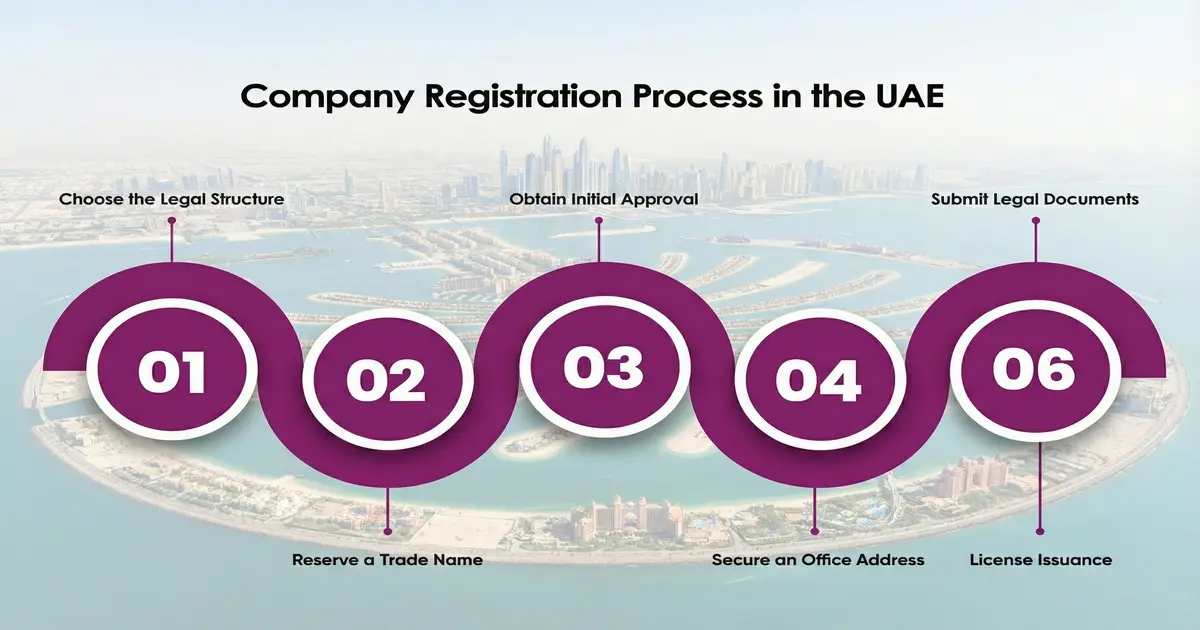
Company Registration Process in the UAE: Step-by-Step Overview
Date: 12-30-2025
The UAE offers a structured and business-friendly framework for company registration. The process depends on jurisdiction selection, approved business activity, legal structure, and regulatory compliance. Following the correct sequence helps avoid delays and legal issues.
This guide explains the complete company registration process in the UAE using practical, experience-based insights aligned with official regulations and real operational requirements. For more information, visit our Home Page.
Understanding the UAE Business Registration Framework
The UAE allows company formation under three main jurisdictions, each serving different operational needs.
| Jurisdiction Type | Market Access | Governing Authority | Office Requirement |
|---|---|---|---|
| Mainland | UAE & International | Economic Departments | Mandatory |
| Free Zone | International / Limited UAE | Free Zone Authority | Flexible |
| Offshore | International Only | Offshore Registrar | Not Required |
Step-by-Step Company Registration Process
Step 1: Select the Business Activity
Business activity selection determines licensing, approvals, and compliance requirements. Activities must match authority-approved classifications.
Step 2: Choose the Legal Structure
| Legal Structure | Ownership | Liability | Common Usage |
|---|---|---|---|
| LLC | 100% Foreign Allowed | Limited | Trading & Services |
| Sole Establishment | Individual | Unlimited | Consulting |
| Branch Office | Parent-Owned | Parent Liable | Market Entry |
Step 3: Reserve a Trade Name
Trade names must comply with UAE naming rules and reflect the business activity. Approved names are reserved for a limited time.
Step 4: Obtain Initial Approval
Initial approval confirms government consent to proceed with registration but does not allow business operations yet.
Step 5: Secure an Office Address
Mainland companies must register a physical office through Ejari. Free zones may allow flexi-desk or virtual office options.
Step 6: Submit Legal Documents
Authorities require notarized documents such as Memorandum of Association, shareholder resolutions, and passport copies.
Step 7: License Issuance
After verification, the business license is issued, allowing legal operations. According to UAE Ministry of Economy data, more than 650,000 active business licenses were recorded in 2024.
Regulatory and Compliance Requirements
| Compliance Requirement | Applicability | Authority |
|---|---|---|
| Corporate Tax Registration | Most Businesses | Federal Tax Authority |
| VAT Registration | Threshold-Based | Federal Tax Authority |
| Economic Substance | Specific Activities | Ministry of Finance |
Bank Account Opening Considerations
UAE banks follow strict KYC and AML regulations. The UAE Central Bank strengthened compliance checks in recent regulatory updates.
Things to Consider Before Making a Decision
- Target market and client location
- Visa requirements for owners and employees
- Long-term compliance obligations
- Banking accessibility
Business Support Services
BizVibez Consultants provides focused support aligned with regulatory requirements:
- Bank Account Opening in UAE: Assistance with documentation and bank compliance processes.
- UAE Residence Visa Services: End-to-end visa processing for investors and employees.
- Compliance Services: Ongoing regulatory filings and authority coordination.
- Virtual Office Solutions: Jurisdiction-compliant address options.
Final Takeaways
Company registration in the UAE follows a regulated and transparent process. Choosing the right jurisdiction, legal structure, and compliance framework ensures long-term stability and operational efficiency.