Offshore Business in the UAE: Structure, Benefits, and Key Regulations
Date: 12-01-2026
Offshore structures in the UAE enable international companies to manage global assets, hold investments, and conduct cross-border operations with streamlined regulations. The core of an offshore company is its non-resident status: it is incorporated in the UAE but restricted from conducting commercial activity within the local UAE market. This structure suits investors seeking asset protection, simplified reporting, and legally compliant international business management.
The central elements include selecting the right jurisdiction, understanding ownership and governance rules, and aligning operational needs with regulatory frameworks. Investors often prioritize confidentiality, global banking access, and international mobility of capital. This content outlines the practical structure, functional benefits, and regulatory requirements associated with offshore entities, supported by first-hand experience managing compliance-heavy business environments across the UAE. For more help, visit our Home Page.
Key Elements of UAE Offshore Business Structures
Offshore jurisdictions operate through specialized registries such as JAFZA Offshore and RAK ICC. Each jurisdiction has its own incorporation rules, shareholder requirements, and documentation standards.
Technical rules determine how an entity can hold assets, open banking facilities, or manage cross-border operations. These fundamentals shape the long-term usability of the structure.
Structural Specifications of UAE Offshore Entities
| Technical Aspect | Description | Notes for Decision-Making |
|---|---|---|
| Legal Status | Non-resident corporate entity | No local UAE business activity permitted |
| Ownership | 100% foreign ownership allowed | No UAE national sponsor required |
| Governing Framework | UAE Offshore Companies Regulations | Variations exist between JAFZA Offshore and RAK ICC |
| Physical Presence | Not required | Registered address mandatory |
| Banking Access | Eligible for UAE international business accounts | Bank due diligence applies |
| Shareholder Privacy | High confidentiality | Aligned with OECD-compliant transparency |
Benefits of Offshore Business Setup in the UAE
Investors select offshore structures mainly for cross-border activities, investment holding, and intellectual property management. These uses align with global regulations while offering operational simplicity.
Practical Advantages
- Asset Protection: Offshore structures often separate personal assets from operational liabilities, reducing exposure.
- Streamlined Compliance: Reporting requirements remain minimal compared to onshore entities.
- Global Investment Handling: Suitable for managing properties, portfolios, or international subsidiaries.
- Jurisdictional Stability: The UAE maintains high regulatory predictability, supported by strong economic governance.
According to the UAE Ministry of Economy 2024 Foreign Business Data Report, offshore jurisdictions saw a 17% rise in holding-structure registrations due to increased demand for cross-border asset protection. Another reference from the World Bank Global Business Index 2024 identifies the UAE as one of the top-rated regions globally for corporate flexibility in non-resident structures.
Regulatory Requirements for Offshore Companies
Offshore companies must adhere to specific compliance rules enforced by each registry:
Key Compliance Elements
- Mandatory Registered Agent: Required to manage documentation, filings, and updates.
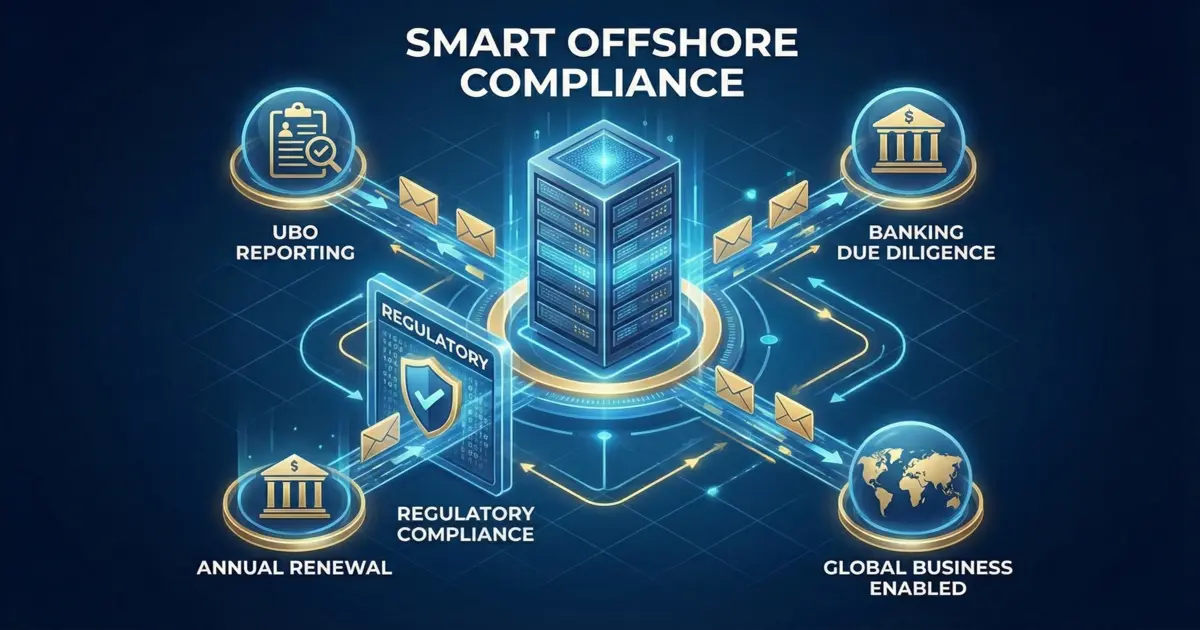
- Ultimate Beneficial Owner Disclosure: UAE requires full UBO reporting aligned with global transparency norms.
- Restricted Local Activity: Offshore entities cannot trade within UAE mainland or free zones.
- Annual Renewal and Basic Reporting: Required to maintain registry validity.
Regulatory Data Overview
| Regulatory Category | Requirement Summary | Operational Impact |
|---|---|---|
| UBO Regulation | Full disclosure | Supports banking compliance |
| Accounting | Basic record keeping | No full audit requirement |
| Local Presence | Local address via agent | No physical office allowed |
| Permitted Activities | International trade, holding, IP | No UAE market operations |
Factors to Evaluate Before Establishing an Offshore Structure
Investors typically encounter decision points related to jurisdiction selection, compliance readiness, and operational expectations.
Critical Considerations
- Purpose of the Entity: Asset holding, investment management, or international operations.
- Jurisdiction Differentiators: JAFZA Offshore allows property ownership in designated Dubai areas, while RAK ICC offers broader cost efficiency.
- Banking Expectations: Banks require detailed documents, including UBO profiles and transaction frameworks.
- Document Source Jurisdiction: Foreign documents may require notarization or legalization before acceptance.
Core Support Services Provided Through This Expertise
The following services support offshore compliance and operational structure without influencing decision-making:
- Legal Services: Guidance on offshore regulations, documentation requirements, and entity governance.
- Compliance Services: Managing UBO filings, registry updates, and annual regulatory submissions.
- PR Services: Handling notarization, attestations, and government-level documentation processing.
- Bank Account Opening in UAE: Assistance with due diligence preparation and banking document alignment.
Final Guidance for Decision-Makers
Selecting the right offshore jurisdiction depends on operational goals, regulatory needs, and long-term strategy. Each jurisdiction offers distinct advantages ranging from asset protection to simplified reporting frameworks. Aligning activity plans, banking expectations, and compliance readiness ensures a sustainable offshore structure.