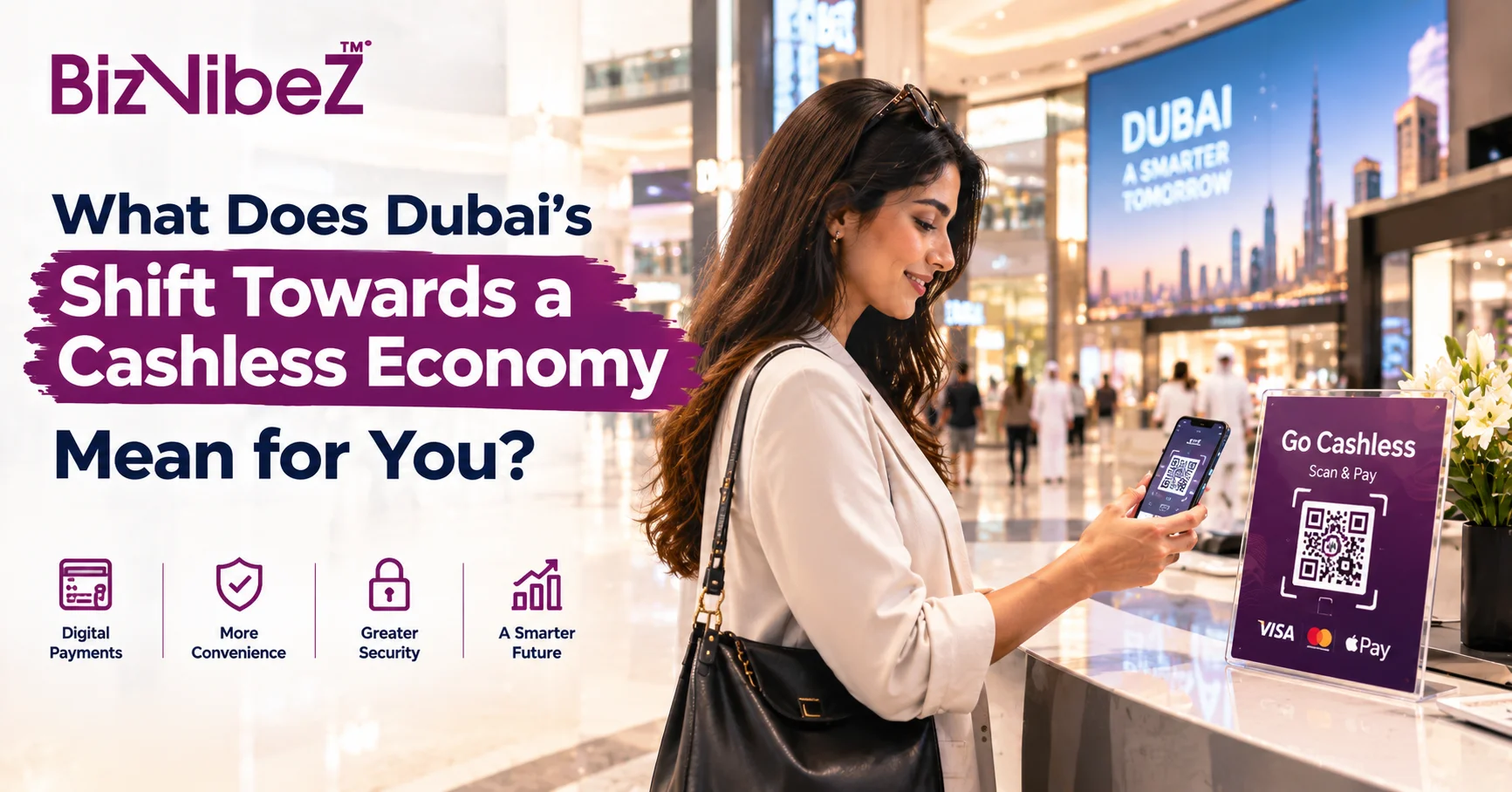
What Does Dubais Shift Towards a Cashless Economy Mean for You?
Date: 20-10-2026
Dubai is moving towards a digital-first economy where card payments, mobile wallets, online transfers and other electronic payment methods are becoming part of everyday life. For residents, tourists, employees and business owners, this shift means greater convenience, faster transactions and new ways to manage payments. However, it also requires people to understand digital security, payment options and the importance of keeping financial records organised.
The Dubai Cashless Strategy, launched in October 2024, aimed to achieve 90% cashless transactions across government and private sectors by 2026. On 9 October 2026, Dubai Finance announced that the emirates cashless transactions index had reached 90.1%, exceeding the target ahead of schedule. This progress highlights how digital payments are becoming increasingly important across Dubais economy.
What Is Dubais Cashless Economy?
A cashless economy is one in which people and businesses increasingly use electronic methods instead of physical banknotes and coins to complete transactions. It does not necessarily mean that cash has disappeared. Instead, digital payments become the preferred option for many everyday purchases and services.
Dubais approach combines digital payment infrastructure, government services, financial technology and wider adoption by businesses. The objective is to make transactions more convenient, efficient and accessible while supporting the emirates broader digital economy.
Common digital payment methods include:
| Payment Method | How It Works | Common Uses |
|---|---|---|
| Debit and credit cards | Payments are processed through a card network and financial institution | Shopping, dining, travel and services |
| Contactless payments | A compatible card or device is tapped on a payment terminal | Retail purchases and public-facing businesses |
| Mobile wallets | A supported smartphone or wearable device stores payment credentials | Contactless purchases and selected online transactions |
| Online bank transfers | Money moves electronically between bank accounts | Bills, supplier payments and personal transfers |
| QR-code payments | A customer scans a code to initiate a supported payment | Retail transactions and selected service payments |
| Government digital payment platforms | Users pay for eligible public services through approved digital channels | Fees, applications and government services |
Availability depends on the merchant, financial institution, payment provider and service being used.
How Will the Cashless Shift Affect Dubai Residents?
For residents, digital payments can make everyday financial activities easier to manage. Paying utility bills, shopping online, booking services and transferring money may require fewer physical visits and less handling of cash.
Digital transactions can also provide electronic receipts and searchable payment histories. These records help residents monitor spending, identify unfamiliar transactions and organise personal finances.
However, convenience depends on having access to a suitable payment method, a functioning device or card and reliable connectivity where required. Residents should also keep an alternative payment option available in case a card is blocked, a device loses power, or a payment system becomes temporarily unavailable.
What Does It Mean for Tourists and New Residents?
Visitors may find that digital payments simplify shopping, dining, transport-related purchases and hotel services. Nevertheless, travellers should not assume that every merchant accepts every international card or mobile wallet.
People relocating to Dubai should also understand how local banking services can support regular financial activities. Depending on eligibility and the banks requirements, opening a UAE bank account may help with salary receipts, recurring payments, transfers and everyday spending.
The following checklist can help visitors and new residents prepare.
| Preparation Step | Why It Matters |
|---|---|
| Check international card compatibility | Helps avoid declined payments |
| Enable transaction notifications | Makes it easier to identify unexpected activity |
| Review foreign transaction settings | Helps clarify how overseas card use is handled by the issuing bank |
| Keep an alternative payment method | Provides a backup during technical issues |
| Understand local banking requirements | Helps residents prepare for account opening where eligible |
| Secure banking applications | Reduces the risk of unauthorised access |
Tourists should also keep their passport, visa and other essential travel documents secure while managing bookings and transactions. Digital payment convenience does not replace the need to meet applicable entry and stay requirements.
How Can Businesses Adapt to Cashless Payments?
Businesses operating in Dubai may need to review how they accept customer payments, record transactions, reconcile accounts and manage financial information. Retailers, restaurants, service providers and professional firms can benefit from choosing payment solutions that suit their customers and operational requirements.
The right approach depends on transaction volume, business model, customer preferences, banking arrangements and integration with accounting systems.
| Business Requirement | Practical Action | Potential Benefit |
|---|---|---|
| Payment acceptance | Offer suitable card and electronic payment options | Makes transactions more convenient for customers |
| Transaction tracking | Maintain consistent digital records and receipts | Supports bookkeeping and reconciliation |
| Accounting processes | Match payment records with invoices and bank statements | Helps identify discrepancies |
| Data protection | Restrict access to payment systems and sensitive information | Reduces exposure to unauthorised activity |
| Customer support | Establish a process for failed or disputed transactions | Improves issue resolution |
| Compliance procedures | Review applicable financial, recordkeeping and data protection obligations | Supports responsible business operations |
Businesses should compare payment providers carefully, including settlement arrangements, transaction reporting, system compatibility, customer support and applicable fees. Digital payments do not automatically guarantee accurate accounts or regulatory compliance. Internal controls and regular reviews remain important.
What Are the Main Advantages and Challenges?
The move towards cashless transactions creates opportunities, but it also introduces responsibilities for individuals and businesses.
| Advantages | Potential Challenges |
|---|---|
| Faster and more convenient transactions | Dependence on working payment systems |
| Easier access to electronic receipts | Exposure to phishing and payment scams |
| Better visibility of recorded spending | Possible service or connectivity interruptions |
| Simplified payment reconciliation for businesses | Additional payment processing requirements |
| Greater access to digital services | Different levels of digital access and familiarity |
Users can reduce many risks by enabling transaction alerts, using secure devices, verifying payment requests and checking account statements regularly. Businesses should train employees to recognise suspicious requests and follow established payment approval procedures.
How Can You Protect Yourself When Making Digital Payments?
Digital payments should be treated with the same care as other financial activities. Never share banking passwords, one-time passcodes, or confidential authentication details with someone claiming to represent a bank or payment provider.
Before completing a transaction, verify the recipient and the amount displayed on the payment screen. Avoid using banking applications on untrusted devices, install software updates promptly and contact the relevant financial institution through an official channel if you notice suspicious activity.
Businesses should also limit employee access according to job responsibilities, review transaction records and establish clear procedures for refunds, supplier payments and account changes.
These precautions are particularly important as digital payment methods become more common across retail, professional services and online commerce.
What Should Businesses Consider Before Making the Transition?
Moving towards digital payments involves more than installing a card terminal or displaying a QR code. Businesses should consider how a new payment method fits into their existing operations.
Before selecting a solution, assess whether it integrates with the accounting system, provides suitable transaction reports, supports the required payment methods and meets relevant security and regulatory expectations.
Small businesses and newly established companies should also understand their banking requirements and keep their financial documentation organised. Professional guidance may help clarify administrative procedures, compliance responsibilities and operational requirements, although the specific obligations depend on the business and its activities.
How BizVibez Consultants Supports Businesses in the UAE
BizVibez Consultants provides business support services relevant to companies navigating the UAEs evolving business environment. As digital transactions become more widely used, businesses may need to review their banking arrangements, administrative processes and compliance procedures.
Relevant services include:
- Bank Account Opening in UAE — Guidance on preparing documentation and understanding bank account application requirements, subject to the chosen banks eligibility criteria.
- Compliance Services — Support with understanding and organising applicable business compliance requirements.
- Operational Services — Assistance with administrative and operational processes that help businesses manage day-to-day activities.
- Legal Services — Support in identifying relevant legal and documentation requirements, with specialist advice where necessary.
The appropriate support depends on the companys structure, activities and individual circumstances.
For enquiries, contact BizVibez Consultants at +971 44 569 917 or info@bizvibez.com, or visit BizVibez Consultants.
Final Thoughts
Dubais shift towards a cashless economy reflects the growing role of digital technology in everyday financial activities. Residents can benefit from convenient payments and better transaction records, while businesses can improve payment processes and financial administration. Both groups should remain aware of security risks, service interruptions and the importance of maintaining reliable records.
Preparing for this change does not require abandoning cash immediately. It means understanding the available payment methods, choosing suitable options and developing secure habits that support a more digitally connected economy.