How Free Zone Licensing Works in Dubai
Date: 01-01-2026
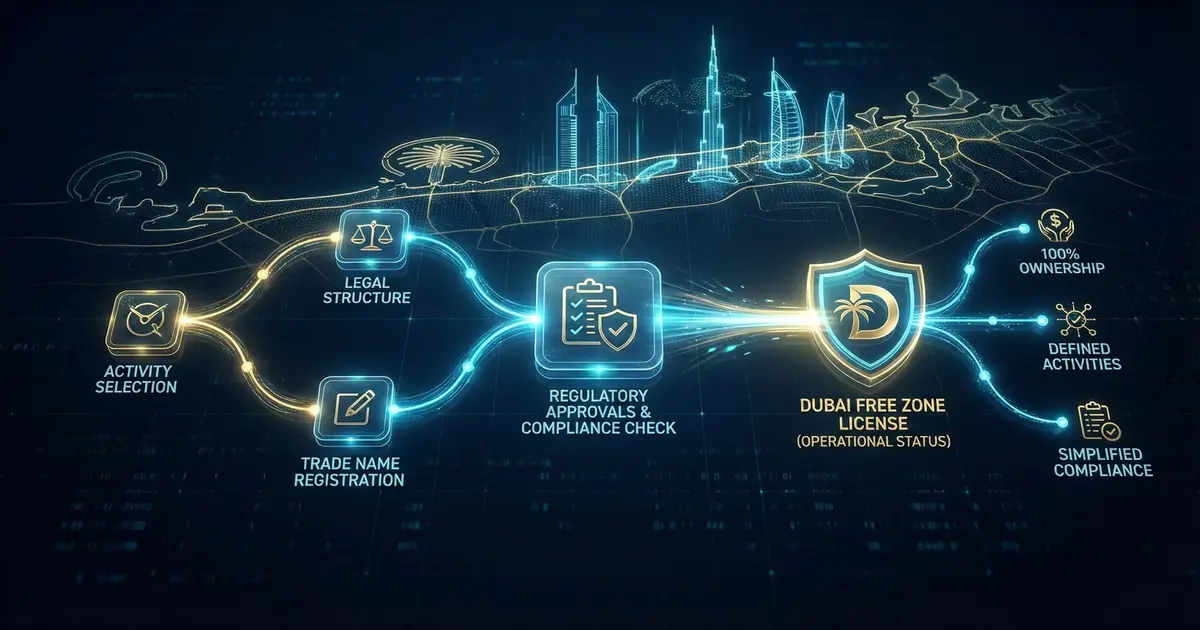
Free Zone licensing in Dubai provides a structured and regulated pathway for businesses to operate with full ownership, defined activities, and simplified compliance. The system works through designated economic zones governed by individual Free Zone Authorities, each issuing licenses based on business activity, legal structure, and operational scope.
BizVibez Consultants works with UAE regulatory frameworks daily, enabling a clear understanding of how Free Zone licensing functions in practice, where delays occur, and how regulatory alignment impacts long-term operations. This guide explains the process clearly, focusing on decision-making, compliance, and operational realities rather than promotional claims. For further guidance, visit our Home Page.
What Free Zone Licensing Means in Dubai
Free Zone licensing allows companies to operate within a specific Free Zone under rules defined by that authority. The license determines permitted activities, office requirements, visa eligibility, and reporting obligations.
Core Characteristics of Free Zone Licenses
| Feature | Description |
|---|---|
| Ownership | 100% foreign ownership permitted |
| Jurisdiction | Operates within the issuing Free Zone |
| Activity Scope | Limited to approved activities only |
| Regulation | Governed by Free Zone Authority |
| Visa Allocation | Based on license type and office size |
Step-by-Step Process of Free Zone Licensing
Step 1: Business Activity Selection
Each Free Zone maintains an approved activity list. Licensing depends strictly on alignment with this list.
| Activity Type | Common Examples |
|---|---|
| Commercial | Trading, import/export |
| Professional | Consulting, IT services |
| Industrial | Manufacturing, assembly |
Step 2: Legal Structure Approval
The legal form determines ownership, liability, and governance.
- FZE: Single shareholder
- FZCO: Multiple shareholders
- Branch: Existing foreign or UAE company
Step 3: Trade Name Registration
Trade names must follow UAE naming rules and align with licensed activities.
- Language: Arabic or English
- Restricted Words: Prohibited without approval
- Relevance: Must reflect business activity
Step 4: License Issuance and Registration
Once documents are approved, the Free Zone Authority issues the license and registers the entity.
Technical Requirements and Compliance Obligations
- Office Space: Flexi-desk or physical office
- ESR: Applicable to relevant activities
- UBO Disclosure: Mandatory ownership declaration
- AML Compliance: Required for regulated activities
Comparing Free Zone Licensing with Other UAE Options
| Factor | Free Zone | Mainland |
|---|---|---|
| Ownership | 100% foreign | 100% allowed for most activities |
| Market Access | Limited outside zone | Unrestricted |
| Regulator | Free Zone Authority | DED (DET) |
| Office Flexibility | High | Moderate |
Factors to Evaluate Before Choosing a Free Zone License
- Operational Scope: Limitations when trading directly in the mainland without local distributors.
- Banking Compatibility: Activities facing enhanced due diligence during account opening.
- Visa Planning: Quotas depending on office type and authority policy.
Business Support Services Offered
- Bank Account Opening in UAE: Structured documentation support aligned with compliance standards.
- Compliance Services: Ongoing regulatory monitoring including ESR and UBO filings.
- Virtual Office Solutions: Compliant address solutions meeting requirements.
- UAE Visa Services: Assistance with employment and residence visa processing.
Final Thoughts
Free Zone licensing in Dubai functions through a structured regulatory system designed to balance ease of setup with compliance control. Business success depends on correct activity selection, regulatory alignment, and long-term operational planning rather than speed alone. Evaluating jurisdiction fit, banking compatibility, and visa needs before licensing leads to sustainable outcomes and fewer regulatory obstacles.